Understanding Metal Bending Techniques in Modern Manufacturing
Introduction
Metal fabrication is a critical part of many industries, including automotive, aerospace, and construction. Achieving precise bends in metal sheets ensures high-quality components, reduces waste, and maintains efficiency. Among the available bending methods, air bending performed on a press brake air bending offers flexibility, accuracy, and cost-effectiveness. This article explores how press brake air bending works, its benefits, and its applications across various industries.
How Air Bending Works
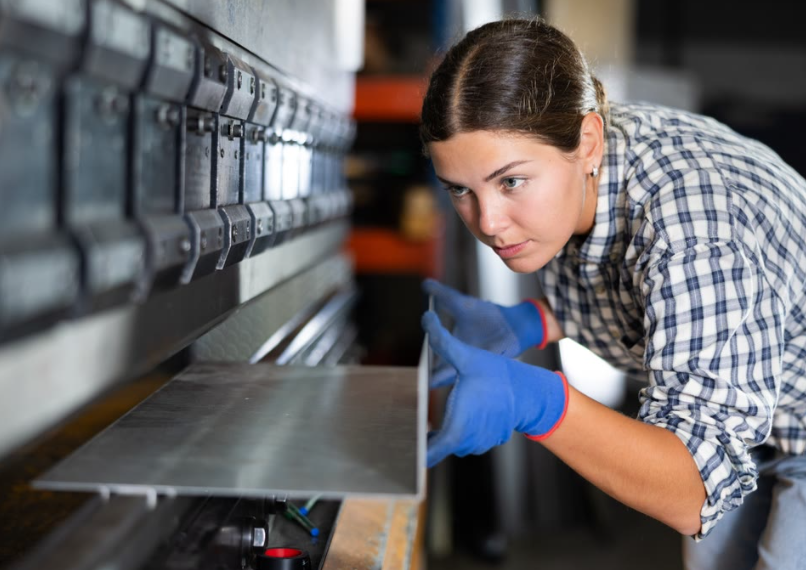
Air bending is a method where the sheet metal does not fully conform to the die. Instead, the bend angle is determined by the depth the ram travels into the material. This approach reduces the force required compared to other methods, such as bottoming or coining. Because of this, a single die can produce multiple angles, which adds versatility to the fabrication process.
The bending process involves:
- Placing the sheet metal over a V-shaped die
- Controlling the ram depth to achieve the desired bend angle
- Adjusting back gauges to maintain consistency across multiple pieces
This method allows manufacturers to handle different metals, including steel, aluminum, and copper, making press brake air bending suitable for a wide range of applications.
Advantages of Air Bending
Press brake air bending offers several key benefits:
- Flexibility: The same die can create different angles, reducing the need for multiple tools. This is particularly useful for prototyping and small-batch production.
- Reduced Force Requirement: Since the metal does not fully contact the die, less tonnage is needed, saving energy and extending machine life.
- Lower Tool Wear: Minimal contact between the tool and sheet reduces wear, prolonging the life of the die.
- Material Versatility: Air bending can handle a variety of metal types and thicknesses efficiently, making it adaptable for diverse projects.
- Precision: Adjustable ram depth and back gauge positioning allow for consistent bend angles, ensuring uniform quality across all parts.
Applications Across Industries
Air bending with a press brake is widely applied in multiple sectors:
Automotive Manufacturing
Body panels, brackets, and support structures require precise bends. The flexibility of air bending allows automotive manufacturers to adjust angles for different parts efficiently.
Aerospace Components
Aerospace parts demand high press brake air bending and lightweight structures. Air bending minimizes material stress, ensuring components maintain strength without deformation.
Construction and Architecture
Structural components, decorative panels, and frameworks often require accurate bends. Air bending provides consistent results, reducing material waste and production time.
Consumer Appliances
Household appliances, including refrigerators, ovens, and washing machines, use bent metal components for frames, casings, and internal supports. Air bending ensures precision for proper assembly and durability.
See also: From Suspicion to Proof: How Modern Tech Detects Infidelity
Factors Influencing Bend Quality
Several factors affect the quality of bends in air bending:
- Material Thickness: Heavier sheets require proper depth adjustment and tonnage.
- Die Selection: Die width and shape must suit the metal type.
- Back Gauge Accuracy: Precise positioning ensures uniform angles.
- Operator Skill: Experienced operators can fine-tune machine settings.
- CNC Technology: Automated control improves repeatability and reduces errors.
Attention to these elements ensures consistent, high-quality bends while minimizing scrap.
Choosing the Right Equipment
Selecting an appropriate press brake air bending machine is crucial for optimal results:
- Tonnage Capacity: Machines must handle the thickest planned materials.
- Number of Axes: Multi-axis press brakes provide precise control for complex bends.
- CNC Controls: Automated systems enhance accuracy and simplify setup.
- Frame Rigidity: Strong frames reduce deflection and maintain bend consistency.
- Maintenance Support: Readily available parts and technical assistance reduce downtime.
Investing in the right machine ensures efficiency, precision, and long-term productivity.
Maintenance Practices
Regular maintenance keeps the press brake in optimal condition:
- Lubrication: Keeps moving parts smooth and reduces wear.
- Inspection: Check mechanical and hydraulic systems periodically.
- Calibration: Ensure accurate alignment of back gauges and ram.
- Software Updates: Keep CNC systems current to maintain performance.
- Operator Training: Skilled operators prevent errors and optimize output.
Effective maintenance reduces machine downtime and ensures consistent production quality.
Economic Advantages
Using press brake air bending provides financial benefits:
- Reduced Material Waste: Accurate bends minimize scrap.
- Lower Energy Usage: Less tonnage lowers power consumption.
- Faster Production: Adjustable angles and quick setup improve efficiency.
- Extended Tool Life: Minimal contact preserves die longevity.
These advantages make air bending a cost-effective choice for manufacturers.
Future Trends in Bending Technology
The metal fabrication industry continues to evolve:
- CNC Enhancements: Adaptive bending improves precision and flexibility.
- Automation: Robotic handling systems increase efficiency and safety.
- Hybrid Press Brakes: Energy-efficient designs reduce operational costs.
- Predictive Maintenance: Sensor-based monitoring prevents unexpected failures.
Adopting these trends ensures air bending remains a competitive and reliable method for metal fabrication.
Conclusion
Press brake air bending is a versatile, efficient, and precise method for shaping sheet metal. Understanding its principles, selecting the right equipment, and adhering to best practices ensures high-quality results. As technology advances, the method continues to offer flexibility, cost-effectiveness, and reliability, making it a cornerstone in modern manufacturing processes.